🔢 Hundred Chart Game
Great job!
Add your score to the leaderboard?
No name or personal information is collected. This score will use TM Player ------. It stays the same while this tab is open and is not saved as a permanent device identity.
🏆 Leaderboard
Anonymous scores are automatically deleted after 30 days.
- Loading…
What Is a Hundred Chart — and Why Is It Useful?
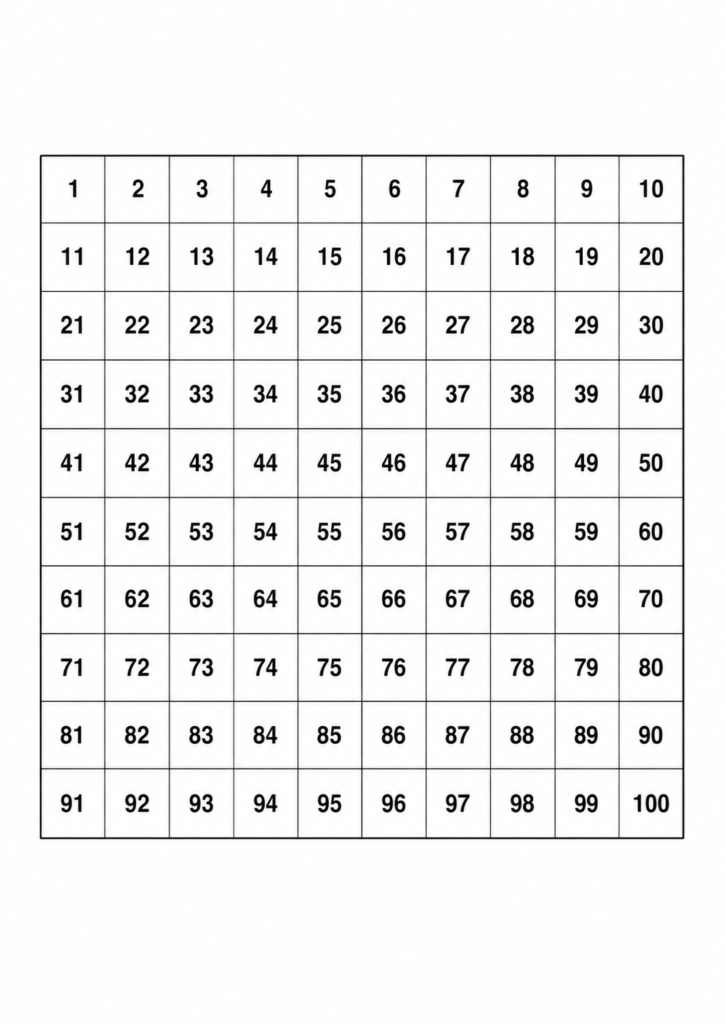
A hundred chart is a 10 by 10 number grid from 1 to 100. It helps kids see how numbers grow, how patterns repeat, and how counting connects to addition, subtraction, skip counting, multiplication, and division. The Hundred Chart Game above turns this simple math tool into an interactive practice activity.
Builds number sense. Children learn where numbers belong instead of only memorizing them.
Shows clear patterns. Kids can quickly notice counting by 2s, 5s, 10s, and other number jumps.
Supports mental math. Moving across and down the chart helps children understand adding and subtracting.
Makes math visual. A hundred chart turns numbers into a map that children can explore.
How to Use the Hundred Chart Game
Start with number finding. Ask children to find numbers on the chart. This builds confidence before moving to harder tasks.
Practice skip counting. Counting by 2s, 5s, and 10s helps prepare children for multiplication facts.
Use movement on the chart. Moving one space right means adding 1. Moving one row down means adding 10.
Keep practice short and regular. A few minutes of focused play works better than long and tiring sessions.
Mix easy and hard questions. Children stay motivated when they can succeed, but still meet small challenges.
Turn mistakes into pattern checks. If an answer is wrong, look at the row, column, and nearby numbers to understand why.
What Can Kids Practice?
Number Hunt
Find the target number on the hundred chart and build number recognition from 1 to 100.
Skip Counting
Practice counting by equal jumps such as 2, 5, 10, or other number patterns.
Addition and Subtraction
Use the chart to understand how numbers change when adding or subtracting.
Multiplication and Division
Connect repeated counting patterns with early multiplication and division thinking.
Mini Hundred Chart Example
More Math Practice
Hundred charts work especially well with other early math games. After practicing here, children can continue with Skip Counting Game, Multiplication Game, or explore more activities on the Games page.
Frequently Asked Questions
What age is a hundred chart good for?
A hundred chart is usually helpful for kindergarten, 1st grade, and 2nd grade learners. Older children can also use it for skip counting, multiplication patterns, and mental math practice.
How does a hundred chart help with addition?
Children can move right to add 1, left to subtract 1, down to add 10, and up to subtract 10. This makes addition and subtraction easier to see.
Can a hundred chart help with multiplication?
Yes. Multiplication is connected to repeated counting. For example, counting by 5s on the chart shows the 5 times table pattern.
What is the best way to practice with a hundred chart?
The best way is short, active practice. Find numbers, follow skip-counting patterns, and solve small addition or subtraction tasks on the chart.
Ready to explore the number grid?
Scroll back up and play the Hundred Chart Game again!